

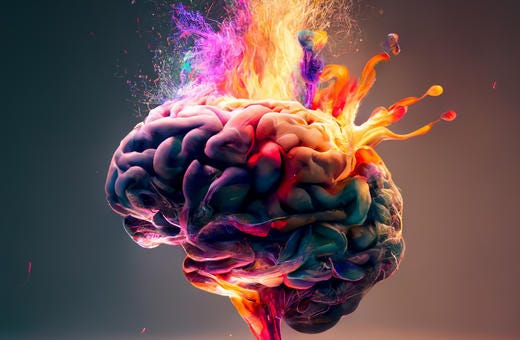
Most world religions teach that there is an afterlife. Eastern religions, for example, believe in reincarnation, where the soul moves on and inhabits another body, whether human or animal. In contrast, the Abrahamic faiths – Judaism, Christianity, and Islam – hold that after we die, a judgment takes place and the outcome determines whether one enters heaven or hell. Only atheists believe that life ends at death, with no judgment or afterlife to speak of.
But something common to all people – those with faith and those without – is the phenomenon of Near Death Experiences (NDEs), which transcends cultural and creedal boundaries. NDEs, as the name suggests, are profound personal experiences associated with death or impending death. NDE researchers say NDEs share similar characteristics. Positive NDEs may involve a variety of sensations including out-of-body experiences (OBEs); feelings of levitation, total serenity, security, or warmth; or an experience of absolute dissolution and the presence of a light. Negative NDEs may include sensations of anguish and distress.
Stories of these nether worldly experiences have been part of human cultures since time immemorial, but NDEs as such first came to broad public attention in 1975 by way of American psychiatrist and philosopher Raymond Moody’s, Life After Life: The Investigation of a Phenomenon-Survival of Bodily Death. Moody presented more than 100 case studies of people who had experienced vivid mental experiences close to death or during “clinical death,” when brain and heart activities temporarily ceased, and were subsequently revived to tell the tale. Their experiences were so remarkably similar that Moody coined the term NDE to refer to this phenomenon. The book was popular and controversial, but it soon led to an uptick in scientific investigations of NDEs with the subsequent founding in 1978 of the International Association for Near Death Studies (IANDS)—the first organization in the world wholly devoted to the scientific study of NDEs and their relationship to mind and consciousness. To date, more than 25 million NDE cases have been reported worldwide.
The vast majority of reported NDEs occur when patients experience cardiac arrest, their hearts stop beating and brainwave activity ceases, but other cases occur during coma, acute brain injury, or asphyxia. Yet, despite being in these dangerously compromised states, the patients later claim to have had such experiences as OBEs, levitation, and the ability to move through walls and doors. The senses, they reported, are often heightened; they hear or see all around them, and can even claim to read other people’s thoughts. There are even NDEs reported from patients who were blind from birth! Most NDE accounts cannot be corroborated, but American theologian and author Gary Habermas, Chair of the Theology and Philosophy Department at Liberty University, has spent many years researching evidence-based NDE cases. More than 300 have now been carefully documented in which details of the stories can actually be verified.
The prevailing consensus in neuroscience however is that consciousness is an emergent property of the brain and its metabolism. When the brain dies, the mind and consciousness of the being to whom that brain belonged cease to exist. In other words, without a brain, there can be no consciousness.
Within this context while some secular scientists have tried to explain NDEs as a brain manifestation of oxygen deprivation or as a by-product of hallucinatory effects, work conducted since the 1990s has effectively debunked such ideas. On the contrary, many NDE experiencers display extraordinary lucidity, rational thought, and heightened awareness, none of which are associated with oxygen deprivation.
Now a fascinating new study from NYU Grossman School of Medicine has revealed that one in five people given cardiopulmonary resuscitation (CPR) after experiencing a heart attack describes lucid experiences of death while all these people were for all intents and purposes clinically dead. A key finding was the discovery of previously undetected spikes of brain activity, including gamma, delta, beta, and alpha waves normally associated with higher mental function. Lead author of the study, Dr. Sam Parnia, revealed some of the details:
Our results offer evidence that while on the brink of death and in a coma, people undergo a unique inner conscious experience, including awareness without distress.
These lucid experiences cannot be considered a trick of a disordered or dying brain, but rather a unique human experience that emerges on the brink of death, [raising] intriguing questions about human consciousness, even at death.
Parnia’s team presented their findings during the resuscitation science symposium at the American Heart Association's Scientific Sessions in November 2022.
Could then the NDEs be integrated somehow on scientific terms with the prevailing consensus in neuroscience that consciousness is an emergent property of the brain and its metabolism?
According to the decades-long research of Dr. Peter Fenwick, a highly regarded neuropsychiatrist who has been studying the human brain, consciousness, and the phenomenon of NDE for 50 years, our consciousness tricks us into perceiving a false duality of self and other when in fact there is only unity. We are not separate from other aspects of the universe but we are an integral and inextricable part of them. And when we die, we transcend the human experience of consciousness, and its illusion of duality, and merge with the universe's entire and unified property of consciousness. Hence, in Fenwick’s view, the brain does not create or produce consciousness; rather, it filters it. As odd as this idea might seem at first, there are some analogies that bring the concept into sharper focus. For example, the eye filters and interprets only a very small sliver of the electromagnetic spectrum, and the ear registers only a narrow range of sonic frequencies. Similarly, according to Fenwick, the brain filters and perceives only a tiny part of the cosmos’ intrinsic “consciousness.” So, ironically, only in death can we be fully conscious. Despite his impressive body of research into this subject, there is no current way to empirically establish the validity of Fenwick’s cosmic consciousness hypothesis. Ultimately, it aligns more with faith than science.
Another new work builds upon a theory Nobel Prize-winning physicist Roger Penrose, Ph.D., and anesthesiologist Stuart Hameroff, M.D., first posited in the 1990s: the Orchestrated Objective Reduction theory (Orch OR). Broadly, it claims that consciousness is a quantum process facilitated by microtubules in the brain’s nerve cells.
The microtubules are tubes made of protein lattices, and they form part of the cell’s cytoskeleton, which is its structural network.
Penrose and Hameroff suggested that consciousness is a quantum wave that passes through these microtubules. And that, like every quantum wave, it has properties like superposition (the ability to be in many places at the same time) and entanglement (the potential for two particles that are very far away to be connected). Normal states of consciousness might be what we consider quite ordinary—knowing you exist, for example. But when you have a heightened state of consciousness, it is because you are dealing with quantum-level consciousness that is capable of being in all places at the same time, Hameroff explains. That means your consciousness can connect or entangle with quantum particles outside of your brain—anywhere in the universe, theoretically.
Quite a few scientists had an easy way to discard this theory. Efforts to recreate quantum coherence—keeping quantum particles as part of a wave instead of breaking down into discrete and measurable particles—only worked in very cold, controlled environments. Take quantum particles out of that environment and the wave breaks down, leaving behind isolated particles. The brain is not cold and controlled; it is quite warm, wet, and mushy. Therefore, consciousness could not remain in superposition in the brain, their thinking went. Particles in the brain thus could not connect with the universe.
But then came discoveries in quantum biology. According to them, living things use quantum properties even though they are not cold and controlled.
This is the study of quantum processes in living organisms, like superposition and quantum entanglement, that actually facilitate biological processes beyond the subatomic level.
Photosynthesis, for example, allows a plant to store the energy from a photon, or a quantum particle of light. The light hitting the plant causes the formation of something called an exciton, which carries the energy to where it can be stored in the plant’s reaction center. But to get to the reaction center, it has to navigate structures in the plant—sort of like navigating an unfamiliar neighborhood en route to a dentist appointment. In the end, the exciton must arrive before it burns up all of the energy it is carrying. In order to find the correct path before the particle’s energy is used up, scientists now say the exciton uses the quantum property of superposition to try all possible paths simultaneously.
New evidence suggests microtubules in our brains maybe even better at guarding this quantum coherence than chlorophyll. One of the scientists who worked with the Orch OR team, physicist and oncology professor Jack Tuszynski, Ph.D., recently conducted an experiment with a computational model of a microtubule. Specifically, Tuszynski’s team simulated sending tryptophan fluorescence, or ultraviolet light photons that are not visible to the human eye, into microtubules. Tscientist reports that, across 22 independent experiments, the excitations from the tryptophan created quantum reactions that lasted up to five nanoseconds. This is thousands of times longer than coherence would be expected to last in a microtubule. It is also more than long enough to perform the biological functions required. “So we are actually confident that this process is longer lasting in tubulin than … in chlorophyll,” he says. The team published their findings in the journal ACS Central Science in 2022.
Tuszynski notes that his team is not the only one sending light into microtubules. A team of professors at the University of Central Florida has been illuminating microtubules with visible light. In those experiments, Tuszynski says, they observed re-emission of this light over hundreds of milliseconds to seconds. “That is the typical human response time to any sort of stimulus, visual or audio,” he explains. Shining the light into microtubules and measuring how long the microtubules take to emit that light “is a proxy for the stability of certain … postulated quantum states,” he says, “which is kind of key to the theory that these microtubules may be having coherent quantum superpositions that may be associated with mind or consciousness.” Put simply, the brain is not too warm or wet for consciousness to exist as a wave that connects with the universe.
Timothy Palmer, Ph.D., is a mathematical physicist at Oxford who specializes in chaos and climate. (He’s also a big fan of Roger Penrose.) Palmer believes the laws of physics must be fundamentally geometric. The Invariant Set Theory is his explanation of how the quantum world works. Among other things, it suggests that quantum consciousness is the result of the universe operating in a particular fractal geometry “state space.”
It roughly means we are stuck in a lane or route of a cosmic fractal shape that is shared by other realities that are also stuck in their trajectories. This notion appears in the final chapter of Palmer’s book, The Primacy of Doubt, How the Science of Uncertainty Can Help Us Understand Our Chaotic World. In it, he suggests the possibility that our experience of free will—of having had the option to choose our lives, as well as our perception that there is consciousness outside ourselves—is the result of awareness of other universes that share our state space. The idea starts with a special geometry called a Strange Attractor.
You may have heard of the Butterfly Effect, the idea that the flap of a butterfly’s wing in one part of the world could affect a hurricane in another part of the world. The term actually refers to a more complex concept developed by mathematician and meteorologist Edward Lorenz in 1963. Lorenz was trying to simplify the equations used to predict how a particular climate condition might evolve. He narrowed it down to three differential equations that could be used to identify the “state space” of a particular weather system. For example, if you had a particular temperature, wind direction, and humidity level, what would happen next? He began to plot the trajectory of weather systems by plugging in different initial conditions into equations.
He found that if initial conditions were different by even one one-hundredth of a percent, if the humidity was just a fraction higher, or the temperature a hair lower, the trajectories—what happens next—could be wildly different. In the graph, one trajectory might shoot off in one direction, forming loops and spins, seemingly at random, while another creates completely different shapes in the opposite direction. But once Lorenz started to plot them, he found that many of the trajectories wound up circulating within the boundaries of a particular geometric shape known as a strange attractor. It was as if they were cars on a track: the cars might go in any number of directions so long as they did not drive it the same way twice and they stayed on the track. The track was the butterfly-shaped Lorenz attractor.
Palmer believes that our universe may be just one trajectory, one car, on a cosmological state space like the Lorenz attractor. When we imagine “what if …?” scenarios, we are actually getting information about versions of ourselves in other universes who are also navigating the same strange attractor—others’ “cars” on the track, he explains. This also accounts for our sense of consciousness, of free will, and of being connected with a greater universe.
“I would at least hypothesize that it may well be the case that it’s evolving on very special fractal subsets of all conceivable states in state space,” Palmer tells Popular Mechanics. If his ideas are correct, he says, “then we need to look at the structure of the universe on its very largest scales, because these attractors are really telling us about a kind of holistic geometry for the universe.”
Tuszynksi’s experiment and Palmer’s theory still do not tell us what consciousness is, but perhaps they tell us where consciousness lives—what kind of a structure houses it. That means it is not just an ethereal, disembodied concept. If consciousness is housed somewhere, even if that somewhere is a complicated state space, we can find it. And that is a start.
NDEs through a Christian Lens
What are Christians to make of these studies? For one thing, the descriptions of NDE experiences - where individuals are able to see panoramically, defy gravity through levitation, move through solid obstacles such as walls and doors, and read someone else’s thoughts – remind very much of the accounts of Jesus’ miracles in the gospels, especially his post-resurrection appearances in which he appeared to his disciples, seemingly out of nowhere, and was able to move effortlessly through doors and stone walls. Other miracles, such as the transfiguration or his walking on water, also strike an eerie pose with many NDE accounts.
Curiously, there is no evolutionary explanation for NDEs.
But what these new findings are demonstrating is that consciousness cannot solely reside in the brain. The distinguished University of Montreal neuroscientist Mario Beauregard and his co-author Denyse O’ Leary wrote in The Spiritual Brain: A Neuroscientist’s Case for the Existence of the Soul:
The scientific NDE studies performed over the past decades indicate that heightened mental functions can be experienced independently of the body at a time when brain activity is greatly impaired or seemingly absent (such as during cardiac arrest). Some of these studies demonstrate that blind people can have veridical perceptions during OBEs associated with an NDE. Other investigations show that NDEs often result in deep psychological and spiritual changes … NDE studies suggest that after physical death, mind and consciousness may continue in a transcendent level of reality. Needless to say, this view is utterly incompatible with the belief of many [evolutionary] materialists that the material world is the only reality.
Furthermore, the fact that NDEs do not discriminate between people of faith and people with no religious worldview strongly comports with the biblical notion that in some sense all humans are immortal:
And just as it is appointed for man to die once, and after that comes judgment, so Christ, having been offered once to bear the sins of many, will appear a second time, not to deal with sin but to save those who are eagerly waiting for him. (Hebrews 9:27-28)
This also hypothetically explains why some individuals experience distressing NDEs, since the God of the Bible makes it clear that not all humans will be saved. As the Bible portrays it, God will ultimately honor our free-will decisions in this life, either to end up in our Creator’s presence or to remain separated forever from Him. Of course, we still need to be cautious in our conclusions. After all, we should not forget that only between 2% and 20% of the dying people experience NDEs. How could we then be definitive about what eternity is and the liaison between our brains and the universal consciousness? But we should not either neglect the fact that even some superior animals are capable of acting as per what we usually call ‘intuition’ about things obviously beyond their existential experience and conventional instincts (e.g., a wounded by a hunter tigress brings her cubs to a village courtyard and dies in it leaving the cubs there to the humans’ cares). Can it be in such a case asserted that some animals share the ability to hope like humans? If so, from where do we and they get the experience of saving hope in our brains if we do not accumulate experience from the future and have no access to consciousness beyond our bodies? Considering the realm of hope, perhaps, we may say that the NGEs are one of the best examples of how science and faith could supplement each other in providing guidance and knowledge.